
Ottawa Itinerary for Couples
An Ottawa itinerary for couples works best when both travellers protect their shared priorities and fixed commitments, then leave flexible time for meals, walks, pauses and slower experiences instead of maximising the number of stops. With two days, prioritise the experiences that matter most; with three days, use the extra capacity for depth, recovery or one interest-specific experience rather than simply adding more activities.
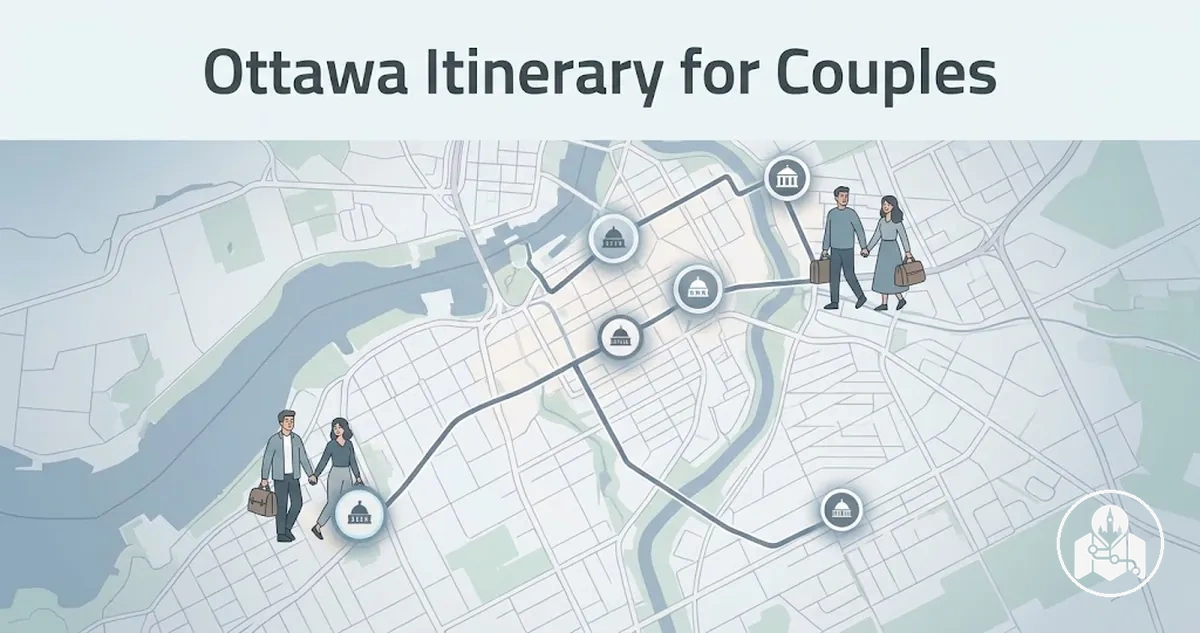
Ottawa couples itinerary planning framework
Build the trip in this order so fixed plans stay protected without crowding out shared time.
-
Agree on shared priorities
Choose the must-do experiences that matter to both travellers before filling individual time slots.
-
Lock fixed commitments
Protect timed attractions, reservations and scheduled events, including the travel time needed to reach them.
-
Keep adjustable shared time
Use meals, walks, pauses and optional activities as flexible blocks that can shorten, lengthen or shift when the day changes.
-
Check itinerary fit
Match each experience to available time, energy, location, weather, season, daylight, opening hours, accessibility and reservation requirements.
- Two days
- Tighter prioritisation: protect the highest-priority shared plans and preserve enough flexibility that a small delay does not displace another protected commitment.
- Three days
- More planning capacity: use the extra day for cultural depth, a longer scenic outing, recovery or one interest-specific experience.
- Special occasion
- Protect one personally meaningful anchor and enough transition time around it; keep a contingency when weather or availability could affect the plan.
Decision rule: when the schedule becomes tight, remove a lower-priority stop before compressing the experiences you agreed to protect or eliminating all flexible time.
The sections below apply this framework to daily pacing, scenic and evening experiences, two- versus three-day stays, and anniversaries or other special occasions.
Table of Contents
Plan the Ottawa Trip Around Shared Priorities and Pace
Choose the shared priorities for an Ottawa couples itinerary before filling individual time slots.
Protect the activities that matter most to both travellers first, then let time constraints, activity intensity, and available flexibility determine the pace.
Fixed commitments such as timed attractions or reservations reduce scheduling flexibility because they require protected time blocks.
Flexible blocks such as meals, walks, pauses, and optional activities can absorb schedule variation around those commitments.
Higher activity intensity or more travel time between locations can increase schedule pressure, while nearby activities and protected rest windows leave more room to adjust.
The illustration below shows protected priorities alongside deliberately open time rather than a detailed day-by-day route.

These criteria organise the main conditions that control pace, from shared goals and fixed commitments to proximity, rest windows, and evening plans.
Accommodation location can also increase or reduce travel friction, so couples can choose where to stay for sightseeing without turning this planning step into a lodging guide.
- Shared priorities: When both travellers identify the same must-do activities, allocate protected time to those experiences before adding lower-priority options.
- Fixed commitments: Timed attractions and reservations should remain protected because moving them may not be possible; arrange flexible blocks around them instead.
- Flexible blocks: Meals, walks, pauses, and optional activities can remain adjustable when their timing is not fixed, giving the itinerary room to absorb delays or changes.
- Activity intensity: A day with several demanding activities leaves less practical space for additional commitments, so reduce schedule density when a slower pace is preferred.
- Travel time: Activities that are farther apart consume more of the available trip time in transfers, leaving less time for sightseeing or slower shared experiences.
- Proximity: Grouping compatible priorities in nearby areas can reduce travel friction and preserve more flexible time between commitments.
- Rest windows: Flexible pauses between fixed commitments provide buffer time when an earlier activity runs long or the couple wants to reduce the day's intensity.
- Evening plans: A reservation or other fixed evening commitment limits how late preceding activities can run, while an open evening allows more flexibility earlier in the day.
A museum-focused couple may protect several fixed cultural visits and use flexible meals or pauses between them, while a couple prioritizing outdoor time and dining may leave larger open blocks and protect an evening reservation instead.
The trip length can be the same in both cases, but different priorities, fixed commitments, and activity intensity produce different pacing.
Balance Major Sightseeing with Time Together
A sightseeing-only schedule can leave little room for time together once priority stops and transition time fill the day.
A more balanced day protects lower-intensity time for a meal, walk, or evening together while still giving major sightseeing a clear place in the plan.
The image below illustrates that lower-density sightseeing rhythm without prescribing a full route.

The useful balance depends on the duration, location, and energy demand of each sightseeing block rather than on a universal number of attractions.
Parliament-area landmarks, museums, central neighbourhoods, and canal-side experiences can each take different amounts of time depending on the specific activity and conditions.
Longer activities or priority stops separated by more travel time increase activity density and leave less flexible shared time, while nearby or lower-intensity plans can leave more room for pauses.
Overpacked day
Several time-demanding sightseeing blocks with repeated transitions leave less room for an unhurried meal, walk or evening together.
Balanced day
Limit major sightseeing to the priority blocks that fit the available time so lower-intensity shared time remains between or after them.
Travellers who need fuller route examples can use the Ottawa travel itineraries while keeping this daily trade-off in mind.
Leave Room for Slower Shared Experiences
Lower-intensity shared experiences can provide flexible time between fixed sightseeing commitments because they are easier to adjust when timing changes.
Used as a buffer, a relaxed block can absorb a delay or leave unhurried time between more time-fixed activities.
The image below demonstrates this kind of flexible shared time within an Ottawa city break.

What makes a flexible block useful
- Duration flexibility
- It can be shortened, lengthened or shifted when the timing of a fixed commitment changes.
- Proximity
- Being close to the surrounding plans reduces transition pressure and makes the block easier to adjust.
- Physical effort
- The activity should fit the travellers' energy and accessibility needs rather than add avoidable strain.
- Reservation dependency
- A less time-fixed activity is easier to move than a reservation or scheduled event that must stay protected.
Weather, opening hours, accessibility, and personal preferences can still limit how useful a particular flexible activity is.
The examples below show how different lower-intensity activities can provide flexible time without prescribing a fixed duration.
- Waterside walk: can provide an adjustable relaxed block when the route is close to the next commitment and conditions suit walking.
- Park pause: can absorb a schedule change when nearby outdoor space is accessible and weather conditions are suitable.
- Cafe stop: can function as flexible time when no reservation fixes the start or end of the visit and an appropriate cafe is nearby.
- Picnic: can allow flexible pacing when weather, location, and practical access support an outdoor stop.
- Relaxed cultural visit: can provide a lower-intensity buffer when admission timing and opening hours allow the visit to shift around other plans.
The useful pacing principle is to keep some shared experiences adjustable enough to shorten, lengthen, or shift when fixed commitments change the day's timing.
Choose Romantic Experiences That Fit the Couples Itinerary
A romantic experience fits a couples itinerary when its attributes match the couple's shared interest, available time, energy, location, and surrounding commitments.
Suitability therefore depends on itinerary fit rather than on an activity being popular or novel.
The illustration below groups scenic, cultural, dining, and relaxed experiences by the kind of shared activity they represent rather than ranking individual venues.
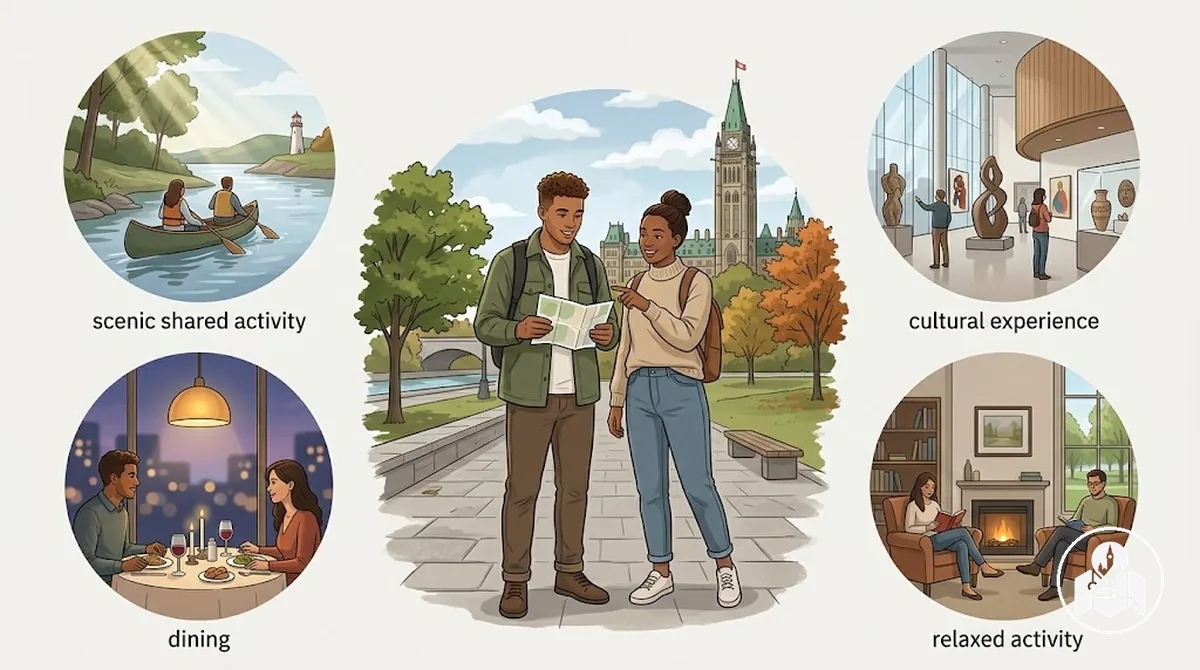
Atmosphere may suit one couple and not another, while activity level affects how easily an experience fits around more demanding plans.
Time commitment and location also matter because a longer activity or one requiring more travel time leaves less flexibility for surrounding plans.
Outdoor experiences depend more on weather and daylight conditions, while a reservation-based activity requires a protected time block.
These conditions can change itinerary fit without making one activity type universally more suitable than another.
The criteria below connect each experience attribute to the condition that affects its suitability and the resulting itinerary implication.
- Shared interest: Choose an experience both travellers want to share; scenic walks or cruises, galleries or museums, dining, cultural evenings, creative dates, and relaxation experiences suit different interests.
- Atmosphere: Match the setting to the kind of shared experience the couple wants, while treating romantic atmosphere as a preference rather than an objective property.
- Activity level: A more physically demanding activity requires enough energy and recovery space in the surrounding day, while a lower-intensity activity can allow more flexible pacing.
- Time commitment: Experiences with a fixed or substantial duration leave less room for other plans, while activities with adjustable duration provide greater flexibility.
- Location: An experience close to surrounding activities requires less travel time, while a more distant location needs additional time between commitments.
- Weather and setting: Outdoor activities are more practical when weather and daylight support them; couples planning weather-dependent or seasonal experiences can choose when to visit Ottawa without turning this decision into a detailed season plan.
- Reservation needs: A reservation with a fixed time requires a protected schedule block, while an experience without a fixed booking can allow more flexible placement.
- Rest-of-day compatibility: An experience fits more easily when its activity level, time commitment, and location leave enough capacity for the plans before and after it.
These criteria can lead different couples to different choices even within the same amount of available time.
One couple may favour an outdoor shared activity when weather, daylight, and energy support it, while another may protect a fixed evening reservation and keep the surrounding plans more flexible.
Scenic Experiences Around Ottawa's Waterways and Parks
Scenic experiences around Ottawa's waterways and parks are waterfront and green-space activities that can add views, movement, or relaxed outdoor time to a couples itinerary.
The Rideau Canal, Ottawa River, Dow's Lake, and central parks support different forms of walking, cycling, resting, and other waterside activities.
The photo below demonstrates how an Ottawa waterway or park setting can provide shared scenic time without implying that one location suits every couple.

The main differences are time commitment, physical effort, seasonal conditions, and activity type.
A short waterfront walk or park pause can fit into a smaller flexible block, while cycling or boating may require more time, effort, equipment, or suitable operating conditions.
Weather and seasonality can also change which outdoor experiences are practical, so activities dependent on water access or seasonal operations need to be checked for the planned visit.
The bullets group scenic experiences by planning burden rather than ranking the settings.
- Rideau Canal: walking along the canal can suit a lower-commitment scenic outing when the route and weather fit the surrounding itinerary, while cycling requires more physical effort and planning.
- Ottawa River waterfront: waterside walking or resting can provide shared outdoor time with flexible pacing, while activities that depend on boat access require suitable operating conditions.
- Dow's Lake: the waterfront supports walking and relaxed time near the water, while cycling or boating can involve greater time commitment, equipment needs, and seasonal conditions.
- Central parks: a park pause or picnic can provide a lower-commitment green-space break when weather and access are suitable.
- Longer active outings: extended walking, cycling, or boating can suit couples who want more movement, but these activities require more itinerary time and may depend on weather, equipment, or seasonal operations.
Outdoor and water-based activities depend on current weather, access, and operating conditions, so availability should be checked for the dates of the trip.
Date-Night, Dining, and Relaxation Experiences
Date-night, dining, and relaxation experiences are evening or low-intensity shared blocks that can give a couples itinerary a distinct change of pace after daytime sightseeing.
A date night may involve a fixed reservation or ticketed start time, while a more flexible evening plan can leave greater freedom to adjust the duration or finishing time.
The photo below illustrates a relaxed shared evening in an Ottawa urban setting rather than recommending a specific venue.
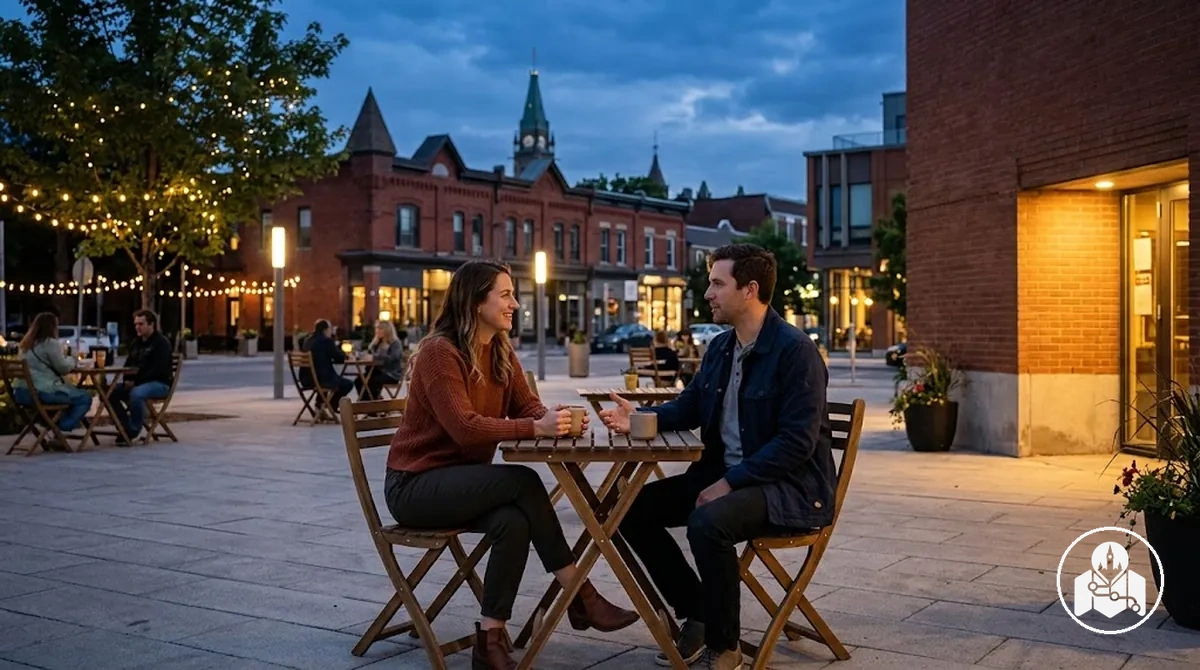
Reservation dependency determines how firmly an evening block needs to be protected, while duration and finishing time affect what can fit before or after it.
Atmosphere and energy level help distinguish an active cultural evening from a quieter shared meal or relaxation period, and travel time can make a distant plan harder to combine with other commitments.
Dining also needs to fit relevant dietary needs, while cultural, creative, and relaxation experiences may need to fit accessibility requirements.
The groups below organise evening experiences by function and scheduling burden rather than by venue or popularity.
- Cultural or entertainment evening: A ticketed performance or other fixed-time event requires the evening schedule to work around its start time and duration, with travel time and the expected finishing time considered before adding other plans.
- Dining: A meal with a fixed reservation requires protected time, while dining without a fixed booking may allow more adjustment when suitable options are available; dietary needs, accessibility, atmosphere, travel time, and the intended duration can affect where it fits in the evening.
- Creative date activity: A workshop, class, or similar structured activity may have a fixed start and duration, whereas an informal creative activity can allow more flexible timing; its energy level and finishing time determine how easily it combines with other evening plans.
- Relaxation or wellness time: A scheduled wellness experience requires a protected block when an appointment is involved, while an informal walk or other low-intensity relaxation period can allow more flexible timing when conditions and accessibility are suitable.
A fixed-time performance or reservation constrains the surrounding schedule because its timing must be protected.
A flexible meal, walk, or informal activity may suit an evening that needs more room to adjust around energy level, travel time, or the day's finishing time.
Adapt the Couples Itinerary to Two or Three Days
With two days, a couples itinerary generally requires tighter prioritisation and higher sightseeing density, while three days adds available time that may allow more flexibility, relaxed periods, or one interest-specific addition.
The practical difference depends on arrival time and departure time because a late arrival or early departure reduces usable time within either trip length.
The comparison below uses the same planning attributes for two days and three days: sightseeing density, relaxed-time capacity, evening flexibility, recovery or buffer time, and capacity for one optional experience.
It compares planning capacity rather than prescribing an exact schedule, and the result can change with energy level, season, fixed commitments, and already-booked activities.
| Attribute | Two days | Three days | Planning implication |
|---|---|---|---|
| Sightseeing density | Usually requires tighter prioritisation when usable time is limited. | May allow priority sightseeing to be distributed across more available time. | The extra day can reduce the need to place several priority blocks close together, subject to arrival and departure times. |
| Relaxed-time capacity | Relaxed periods compete more directly with priority sightseeing for limited time. | Leaves more room for relaxed periods when fixed commitments do not occupy the extra time. | Couples may protect slower shared time more easily without removing a priority block. |
| Evening flexibility | Evening time may carry more planning weight when daytime priorities fill much of the stay. | May provide more flexibility to keep an evening lighter or separate it from a demanding sightseeing day. | Energy level and existing reservations still determine how much evening flexibility is practical. |
| Recovery or buffer time | Leaves less available time for recovery or schedule changes when priority blocks are closely spaced. | May support more buffer or recovery time between demanding activities. | Additional buffer can absorb changes without automatically displacing another priority, unless the extra day already contains fixed commitments. |
| Room for one interest-specific addition | An optional experience may require replacing or reducing another planned block. | The extra day may support one interest-specific addition while retaining more of the core plan. | Whether the addition fits still depends on its duration, travel requirements, season, and the couple's energy level. |
The main change from two days to three days is additional planning capacity, not a requirement to add more activities.
Couples can use that extra day to lower sightseeing density, protect recovery time, keep more evening flexibility, or make room for an optional interest-specific experience.
A three-day stay can still feel constrained when arrival or departure reduces usable time or when bookings occupy large parts of the schedule, while a two-day stay can remain relatively flexible when commitments are limited.
Trip length therefore changes the available planning space, but the practical itinerary still depends on usable time and existing commitments.
Priorities for a Two-Day Couples Weekend
A two-day weekend should protect the must-do sightseeing blocks that fit the usable time, one or two couple-focused experiences, an evening plan, and enough buffer that a small delay or longer visit does not automatically displace another protected commitment.
Limited time makes restraint important, so the priorities should rank what to protect first rather than try to fit every possible stop.
Usable time depends on arrival and departure hours as well as any fixed commitments already booked.
A late arrival or early departure reduces the practical capacity of the two-day stay, so the sequence below should be adjusted around the time actually available rather than around the weekend label alone.
- Prioritise must-do sightseeing: protect the sightseeing blocks that matter most to the couple before adding lower-priority activities.
- Protect couple-focused time: keep one or two shared experiences that add time together without forcing the rest of the itinerary into a tighter sequence.
- Set the evening plan: place any reservation, performance, or other fixed evening commitment early enough in the planning process that daytime activities do not overrun it.
- Use proximity to limit travel: group compatible activities in nearby areas when possible so less usable time is lost moving between priority blocks.
- Keep buffer time: leave some flexible time around fixed plans so delays, longer visits, or changes in energy do not automatically disrupt the rest of the two-day weekend.
If timing becomes tight, drop a lower-priority stop before reducing the must-do sightseeing, couple-focused experience, evening plan, or essential buffer that the couple has chosen to protect.
Travellers who need the complete day-by-day route can plan two days in Ottawa after setting these priorities.
What to Add with a Third Day
A third day is most useful for adding depth, recovery, or one interest-specific experience rather than simply increasing the number of stops.
The extra time creates more capacity, but the most useful addition depends on what the first two days already covered.
Choose the third-day use by considering remaining energy, weather, travel time, and whether the couple prefers an indoor or outdoor experience.
If the first two days already covered the main cultural priorities, the extra day may suit a longer scenic outing or a slower neighbourhood period; if the earlier schedule was physically demanding, recovery or relaxation may fit better.
Poor weather can shift an outdoor plan toward an indoor cultural option, while longer travel time can make a distant activity less practical.
The options below show different ways to use the extra capacity without creating a complete day-three itinerary.
- Cultural depth: add another museum or gallery block when cultural interest remains high and the first two days did not already cover that priority in enough depth.
- Longer scenic outing: extend outdoor time when energy, weather, and travel time support a less compressed scenic experience.
- Relaxed neighbourhood time: use the extra day for slower exploration when the couple wants more flexibility, less movement between major stops, or additional recovery.
- Relaxation or wellness time: add a low-intensity shared block when energy is lower or when the earlier itinerary was more demanding, subject to accessibility and any reservation requirements.
The third day changes itinerary capacity rather than creating a mandatory route.
Travellers who want a complete day-by-day structure can plan three days in Ottawa after deciding whether the extra time is better used for depth, recovery, or an interest-specific experience.
Adjust the Itinerary for an Anniversary or Special Occasion
An anniversary or other special occasion can change the itinerary by making one meaningful experience worth protecting even when that means fitting fewer attractions around it.
The occasion anchor should reflect what matters to the couple rather than a generic idea of romance, with protected transition time before and after it so travel or a small delay is less likely to turn the celebration into another tightly packed stop.
Personal significance and atmosphere are subjective, but timing, reservation reliability, and travel time create practical scheduling constraints.
A fixed reservation requires the surrounding itinerary to adjust around its start time, while a flexible celebration leaves more room to change pace.
If the occasion depends on a particular dining, cultural, or private setting, the plan should also account for relevant preferences and accessibility needs.
A contingency is useful when weather, availability, or another condition could affect the chosen experience.
The criteria below organise the factors that determine whether an occasion anchor is meaningful, reliable, and compatible with the rest of the trip.
- Personal meaning: prioritise an experience that reflects the couple's shared interests, memories, or preferences rather than selecting an activity only because it is commonly labelled romantic.
- Timing and reservation: protect the required time when the celebration depends on a fixed reservation or scheduled event, and adjust nearby plans so delays are less likely to conflict with it.
- Atmosphere: choose the level of privacy, social activity, or formality that suits the couple, recognising that the preferred atmosphere depends on personal expectations rather than a universal standard.
- Dining or cultural preference: select the occasion anchor around the type of shared experience the couple values, while accounting for dietary needs, accessibility, and any fixed start time.
- Travel time: allow enough time to reach the occasion anchor without compressing the surrounding itinerary; a more distant experience requires a larger transition block than one close to existing plans.
- Contingency: keep an alternative or adjustable surrounding plan when weather, availability, or another dependency could affect the primary celebration.
- Surrounding unscheduled time: leave flexibility before or after the meaningful experience so the occasion is not immediately constrained by another fixed commitment.
A reservation-led evening creates a fixed commitment, so daytime activities need to finish with enough protected time for travel and the reservation itself.
A flexible daytime celebration can be shortened, extended, or shifted more easily, allowing the rest of the itinerary to adjust around energy, conditions, and the couple's preferred pace.