
Central landmarks + limited time
Downtown Ottawa is the natural match when Parliament Hill and other central landmarks make up a large share of the itinerary and reducing repeated daily travel matters.
For most sightseeing itineraries concentrated in central Ottawa, start with Downtown Ottawa, ByWard Market, or Centretown and choose among them by your attraction cluster, walking tolerance, transit needs, trip length, and evening plans. Downtown favours central-landmark proximity, ByWard Market combines central walking with dining and evening activity, while Centretown offers flexible central access whose usefulness depends more on the exact accommodation location.
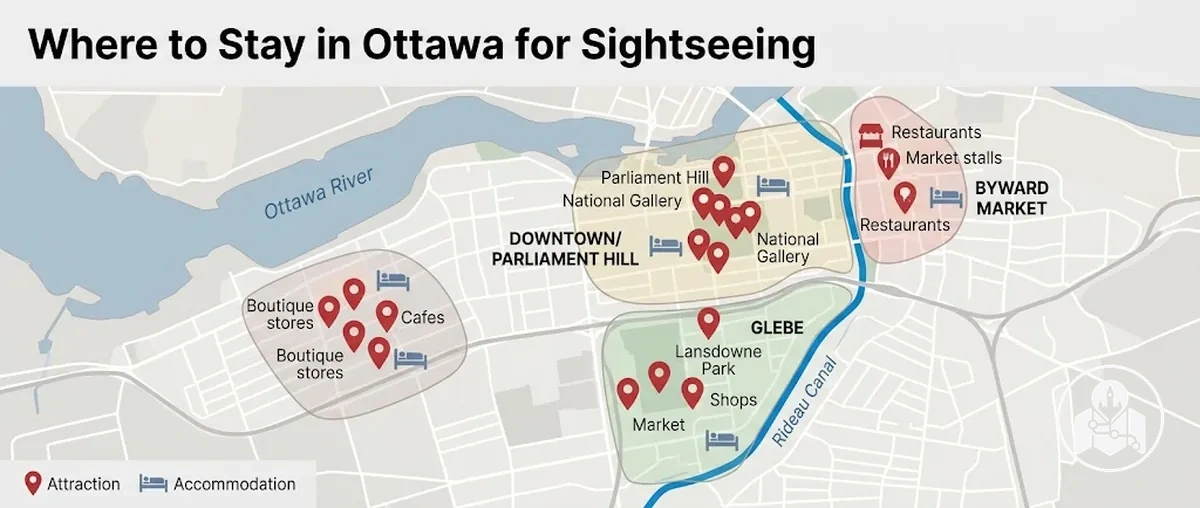
Match the sightseeing base to the itinerary
Use the condition that changes your daily movement most. The goal is not to choose the most popular neighbourhood, but the base that keeps your priority stops easiest to reach with an acceptable walking, transit, and evening trade-off.
Central landmarks + limited time
Downtown Ottawa is the natural match when Parliament Hill and other central landmarks make up a large share of the itinerary and reducing repeated daily travel matters.
Central walking + dining/evening activity
ByWard Market fits when nearby central sightseeing is combined with restaurants or evening activity, provided the busier atmosphere suits your preferences.
Flexible central access
Centretown can work well when the exact accommodation location provides practical walking routes or straightforward transit to the planned stops.
More time or willingness to travel
Outside central Ottawa can remain workable when the extra daily journeys fit the trip length and the transport connections serve the actual sightseeing cluster.
Decision rule: favour the area that keeps the greatest share of your priority attractions within comfortable walking range or straightforward transit, then use trip length and evening preference to resolve the remaining trade-off.
The suitability of an Ottawa sightseeing base changes with the location of your priority attractions and how you plan to move between them. Walkability reduces transport needs when stops cluster nearby; transit matters more when they do not. Short stays make repeated travel more costly in time, while evening preferences can distinguish between areas with otherwise similar daytime access.
A sightseeing-friendly accommodation area in Ottawa is one that reduces travel friction for the attractions and activities on your actual itinerary. Weight a criterion more heavily when it materially changes access, time use, or comfort for that specific trip.

Proximity matters most to the attraction cluster, not merely to one landmark or an abstract city centre. A base becomes more useful when it reduces repeated travel between several high-priority stops.
If priority attractions are dispersed, being close to one stop may provide less practical benefit because the remaining journeys can still add travel time or transfers.

Sightseeing walkability means practical on-foot access between the accommodation base and the visitor's actual sightseeing stops. A route works well when the stops can be connected comfortably enough for that visitor without relying on transit for routine movement.
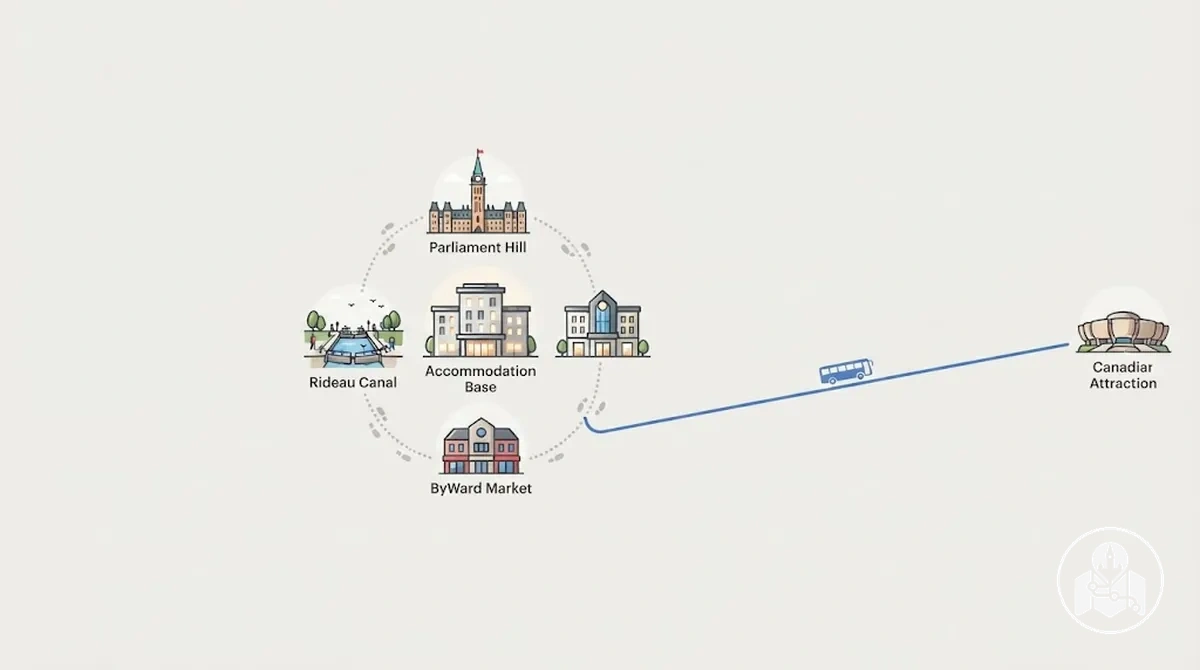
Transit access becomes important when priority attractions or activities extend beyond the visitor's comfortable walking range. A nearby stop adds value only when its routes actually serve the sightseeing areas on the itinerary.
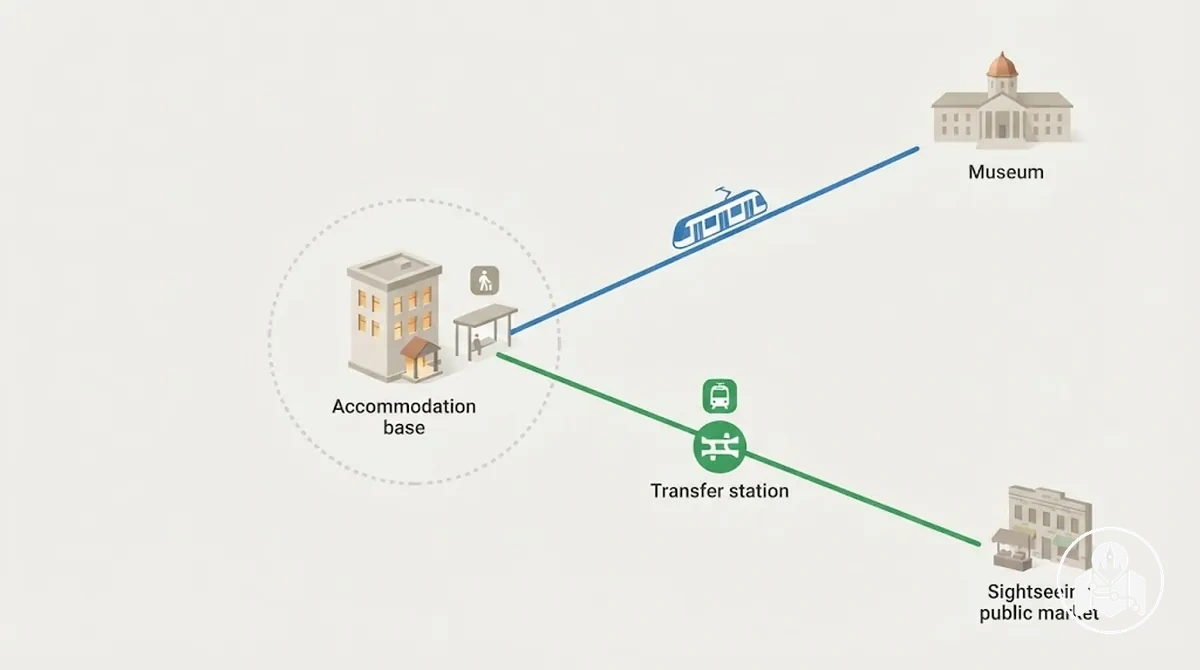
Evaluate the connection in this order
For route-level planning after choosing the accommodation area, understand Ottawa transport options.
Trip length changes the cost of repeated daily travel. The same journey takes a larger share of the available sightseeing time on a tightly scheduled short stay than on a longer, more flexible trip.
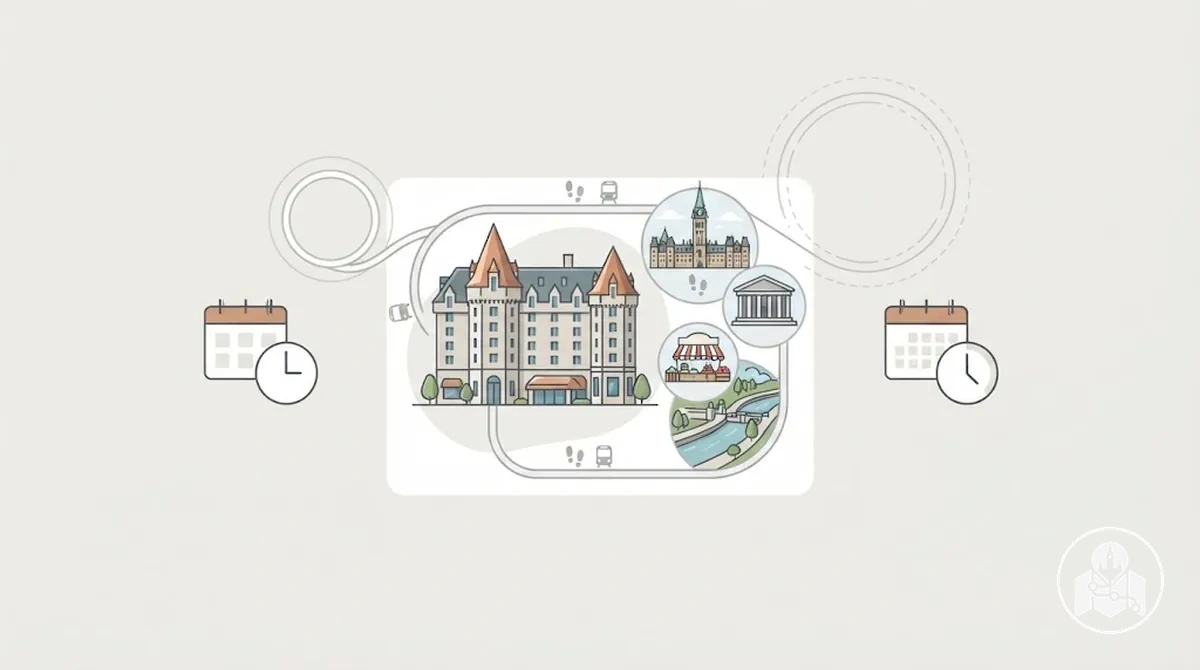
Short or tightly scheduled stay
Repeated journeys between the accommodation base and sightseeing areas compete directly with limited activity time. A central or otherwise well-connected base gains value when several priority stops are concentrated in the same part of the city.
Longer or more flexible stay
The same daily travel can be easier to absorb. A location farther from the main sightseeing cluster can remain suitable when the visitor accepts the extra journeys or values another location preference.
The deciding factor is the actual itinerary, not trip length alone. For a compact example, plan a two-day Ottawa stay and compare how much of the available time each possible base would require for travel.
Evening suitability around an accommodation area is location-specific and time-specific, not a blanket property of an entire neighbourhood.
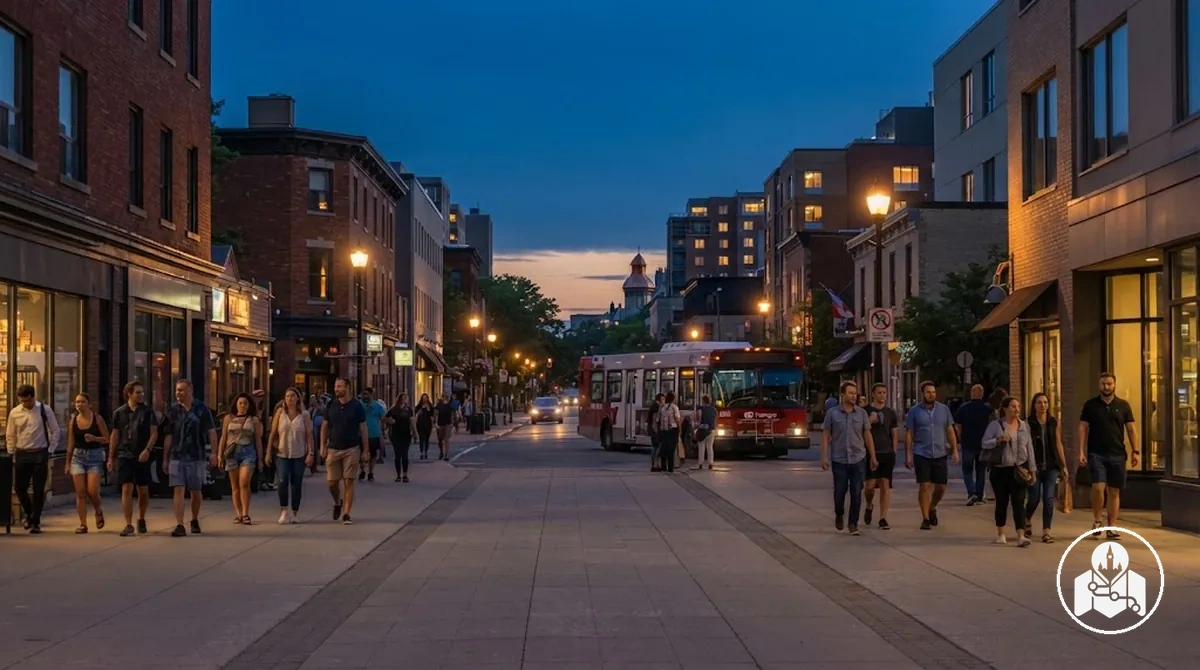
Downtown Ottawa, ByWard Market, and Centretown can all function as central sightseeing bases, but they differ in proximity, walkability, transit dependence, evening atmosphere, and short-stay practicality.
Compare them by how each base fits the visitor's planned sightseeing pattern rather than treating one area as suitable for every itinerary.
| Area | Proximity to major sights | Walkability | Transit dependence | Evening atmosphere | Short-stay practicality |
|---|---|---|---|---|---|
| Downtown Ottawa | Close to Parliament Hill and other central landmarks. | Practical when the itinerary is concentrated in the central sightseeing core. | Lower for central stops and greater when planned attractions extend beyond the core. | More dependent on the exact block and evening plans than the more activity-focused ByWard Market. | Practical when a short stay prioritises central landmarks and limiting repeated daily travel. |
| ByWard Market | Close to the Market, Rideau area, and several nearby central attractions. | Practical when sightseeing is concentrated around nearby attractions, restaurants, and central streets. | Lower for nearby central stops and greater for destinations farther from the Market area. | More strongly associated with restaurants, bars, and evening activity. | Practical when a short stay combines central sightseeing with nearby dining or evening activity. |
| Centretown | Provides central access, with proximity to individual sights depending more on the exact accommodation location. | Supports walking to many central destinations, although some routes can be longer than from Downtown Ottawa or ByWard Market. | Varies with the exact accommodation location and the destinations included in the itinerary. | Changes by street and local activity pattern rather than having one uniform evening character. | Practical when a short stay allows more flexibility in daily movement between the accommodation base and sightseeing areas. |
The main trade-off is how directly each area supports the actual sightseeing pattern: Downtown emphasises central-landmark proximity, ByWard Market combines central access with stronger dining and evening activity, and Centretown can require more movement depending on the exact accommodation location.
After choosing the type of base that fits the trip, compare sightseeing areas according to the attractions you actually plan to visit.
Downtown Ottawa suits a sightseeing-focused stay when central landmarks, including Parliament Hill, make up a large share of the itinerary.
Its main advantage is proximity: a downtown base can reduce repeated daily travel when several planned stops remain concentrated in the central sightseeing core, especially on a short stay, while transit can cover destinations beyond the immediate area.
The advantage weakens when most planned activities are elsewhere or when another neighbourhood better matches priorities beyond sightseeing access. Downtown is useful because it fits the itinerary, not simply because it is central.
ByWard Market can be a practical base for visitors who want central walking access for sightseeing together with nearby restaurants and evening activity.
Its daytime value is strongest when planned stops are concentrated around nearby central sights. Later in the day, the higher level of restaurant and venue activity changes the character of the surroundings and can mean more noise depending on the exact accommodation location.
That atmosphere is a benefit for some visitors and a trade-off for others, so suitability depends on both daytime access and the visitor's preference for evening activity.
Centretown can work as a sightseeing base when the exact accommodation location aligns well with the planned stops.
Practical walking routes can reduce daily travel for nearby itineraries, while public transport can support access to destinations farther away. The neighbourhood label alone does not guarantee identical access because routes and connections vary across the area.
Judge Centretown from the specific accommodation address and its relationship to the sightseeing cluster rather than from the neighbourhood name by itself.
Visitors staying in Ottawa without a car generally benefit from a central or otherwise well-connected accommodation base when most priority attractions are reachable by practical walking routes or straightforward public transit.
A car-free base is workable when routine sightseeing journeys stay simple for the visitor's own mobility needs rather than assuming the same walking range for everyone.
Car-free decision sequence
For route choices, transport details, and a broader car-free itinerary, plan Ottawa without a car.
Staying outside central Ottawa can be workable, but greater distance from the planned sightseeing cluster can increase daily travel and transport dependence. The relevant trade-off is itinerary efficiency rather than neighbourhood quality.
Short, concentrated sightseeing trip
Repeated journeys from a non-central base consume a larger share of limited sightseeing time and can reduce flexibility when several stops require separate trips to and from the accommodation.
Longer or more flexible trip
The same outer-area travel requirement can remain acceptable when the visitor is willing to make the extra journeys and the transport connections suit the itinerary.
For example, someone who wants to plan a three-day Ottawa stay may have more flexibility to accommodate a less central base than a visitor with a tightly compressed schedule.
Suitability therefore depends on the exact connection between the accommodation area and the priority attractions, the transport dependence it creates, and whether that daily travel fits the available trip time.